
Hepatitis, Associated Porphyria in Man Treated With Antivirals
Written by |
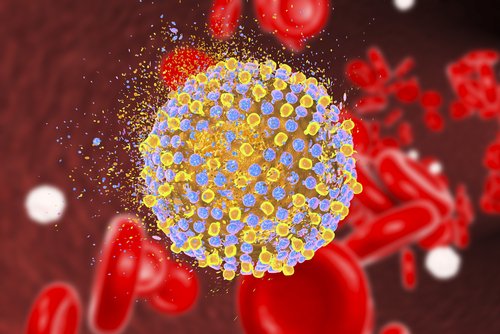
A man with porphyria cutanea tarda (PCT) linked to a chronic hepatitis C virus infection was successfully treated for both conditions with direct-acting antiviral agents.
Researchers considered this case notable for the patient’s dramatic recovery, and the lack of excessive iron in his liver, which is frequently observed in patients with hepatitis C-associated PCT.
His case was described in the study, “Hepatitis-Induced Porphyria: Are Direct-Acting Antiviral Agents the Way of the Future?,” published in the ACG Case Reports Journal.
PCT, the most common form of porphyria, can result from a genetic deficiency in the enzyme uroporphyrinogen decarboxylase (UROD), as well as from iron overload in the liver and hepatitis C infection.
A previous case study described a patient who achieved remission of hepatitis C-associated PCT following treatment with direct-acting antiviral agents. Another study found that antivirals can prevent the onset of PCT in people with hepatitis C.
The present report describes the case of a 58-year-old man in Virginia with chronic hepatitis C without iron overload but symptoms of PCT-predominant mixed porphyria, and whose condition improved dramatically after treatment with direct-acting antiviral agents.
In addition to hepatitis C, the man had a history of Crohn’s disease, an inflammatory bowel disorder, and advanced kidney cancer that had spread to his lungs. He was admitted to a hospital with a painful, blistering rash that had appeared six to eight weeks earlier.
A skin exam revealed red, inflamed lesions with blisters and a dried crust of blood.
Lab tests showed he had high levels of aspartate aminotransferase (112 units/L; normal range: 10–40 units/L) and alanine aminotransferase (166 units/L; normal range: 7–56 units/L), two liver enzymes that when elevated may indicate the liver is inflamed and damaged. He also had a high hepatitis C viral load, and a normal blood iron level.
The patient also had high levels of total porphyrins (6 micrograms/deciliter [mcg/dL]; normal range: 0–1 mcg/dL), zinc protoporphyrin (69 mcg/dL; normal range: less than 35 mcg/dL), and uroporphyrin (91 mcg/dL; normal range: less than 2 mcg/dL), all indicative of hepatitis C-associated PCT.
Images taken of the liver showed mild-to-moderate tissue scarring. Treatment with the direct-acting antivirals glecaprevir/pibrentasvir was initiated for eight weeks. The patient’s rash, viral load, and liver enzyme levels all showed marked improvements with this treatment.
“Although our patient had a mixed type of PCT, he did not have [iron] overload and showed drastic improvement of his [skin] lesions after starting glecaprevir/pibrentasvir … parallel to his [hepatitis C virus] response with normalization of liver enzymes and undetectable viral load,” the researchers wrote.
“Further studies are needed to determine whether [direct-acting antiviral] agents can be used as primary treatment for non-[iron] overload [hepatitis C virus]-associated PCT,” they concluded.




Leave a comment
Fill in the required fields to post. Your email address will not be published.